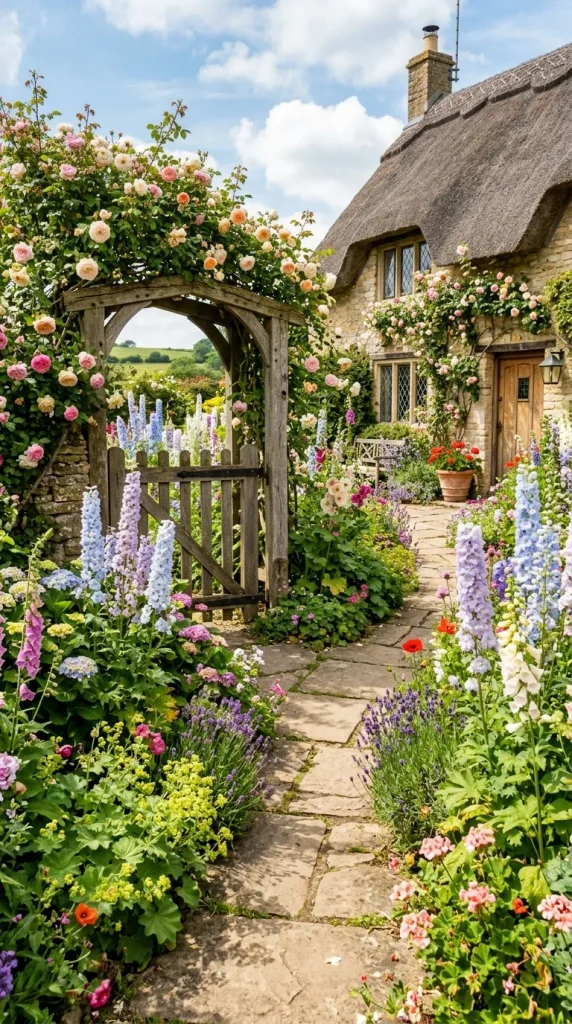
The English cottage garden style celebrates charming, romantic disorder. Rather than rigid lines and manicured perfection, this approach favors overflowing borders, dense planting schemes, and a whimsical mix of perennial flowers that attract pollinators and sway gracefully in the breeze.
How to Make It
- Step 1: Enrich your garden soil with plenty of organic compost to support a high density of plants competing for nutrients and moisture.
- Step 2: Lay out winding flagstone or gravel pathways that meander through the planting beds, inviting slow, exploratory strolls.
- Step 3: Plant tall architectural flowers like delphiniums, foxgloves, and hollyhocks toward the back of the beds to create vertical layers.
- Step 4: Fill the mid-ground and foreground with cascading mounds of lavender, sweet-scented roses, chamomile, catmint, and wild poppies.
Tips and Variations
- Plant en masse rather than in isolated specimens; cottage gardens thrive on abundance and overlapping plant varieties.
- Leave spent flower heads on certain plants like coneflowers through the late autumn to provide winter food for local birds and textural interest.
- Variation: Incorporate a rustic wooden trellis draped in climbing sweet peas and rambling heritage roses over a weathered wooden garden gate.
4. Modern Vertical Living Green Wall