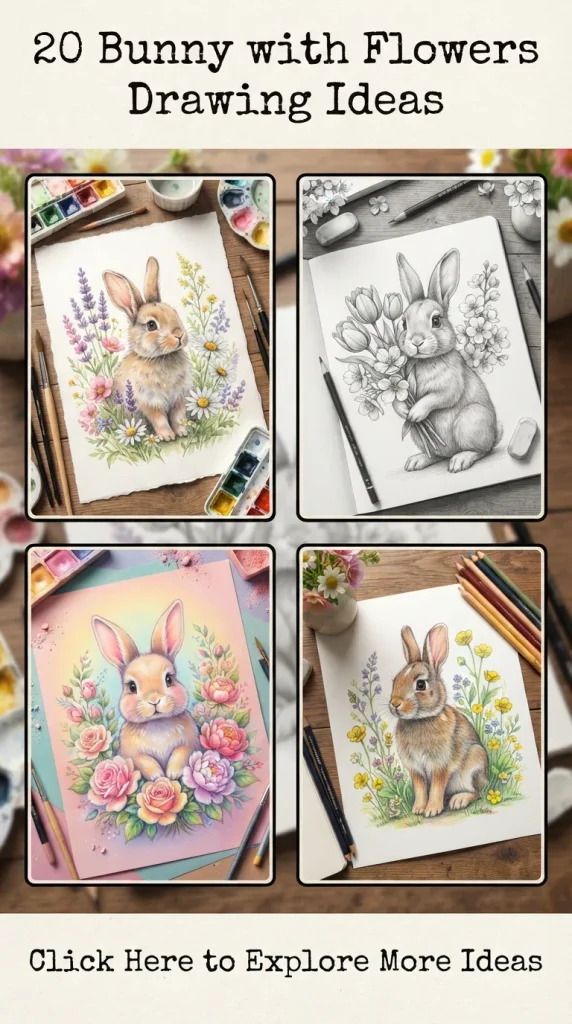
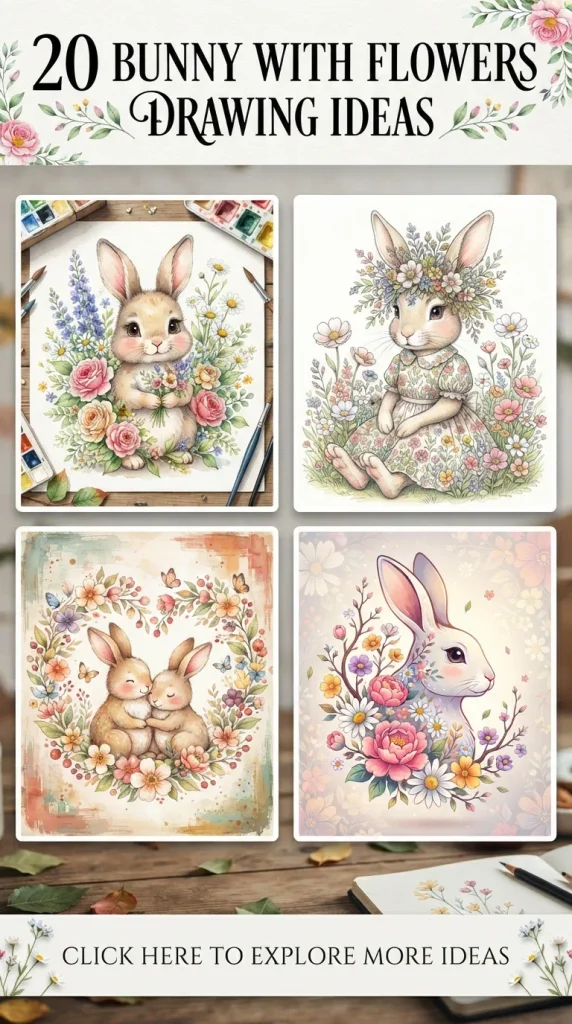
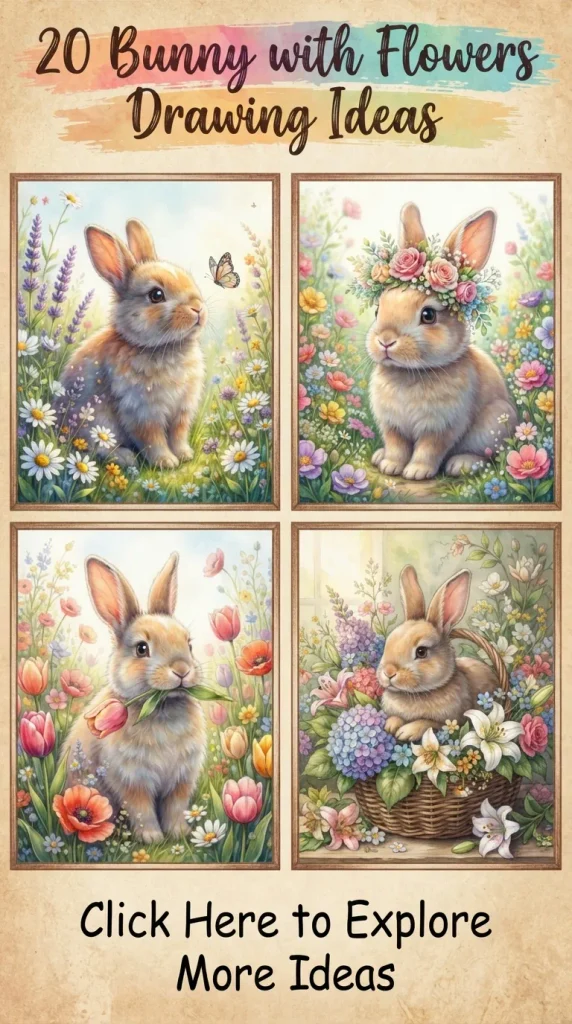
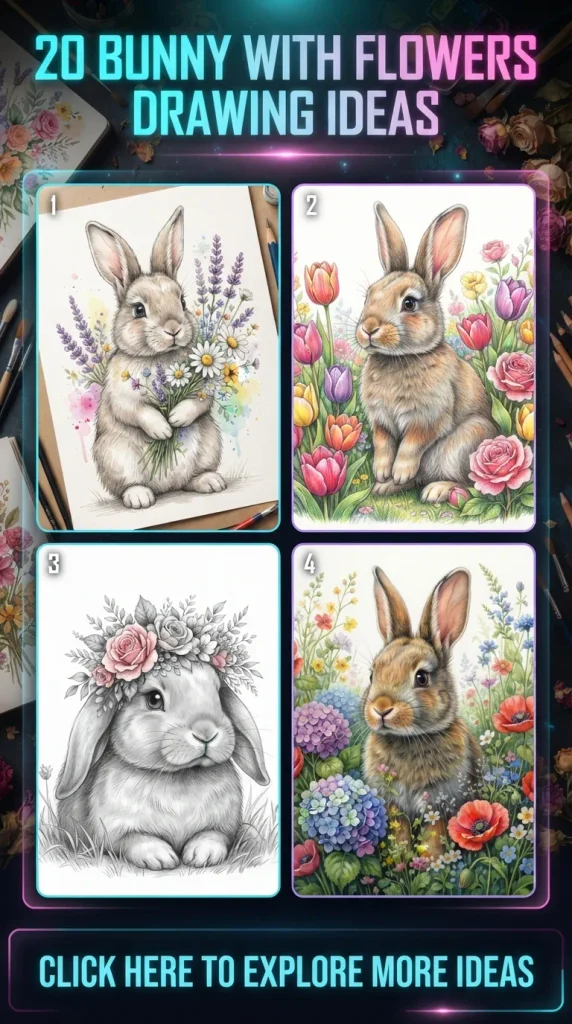
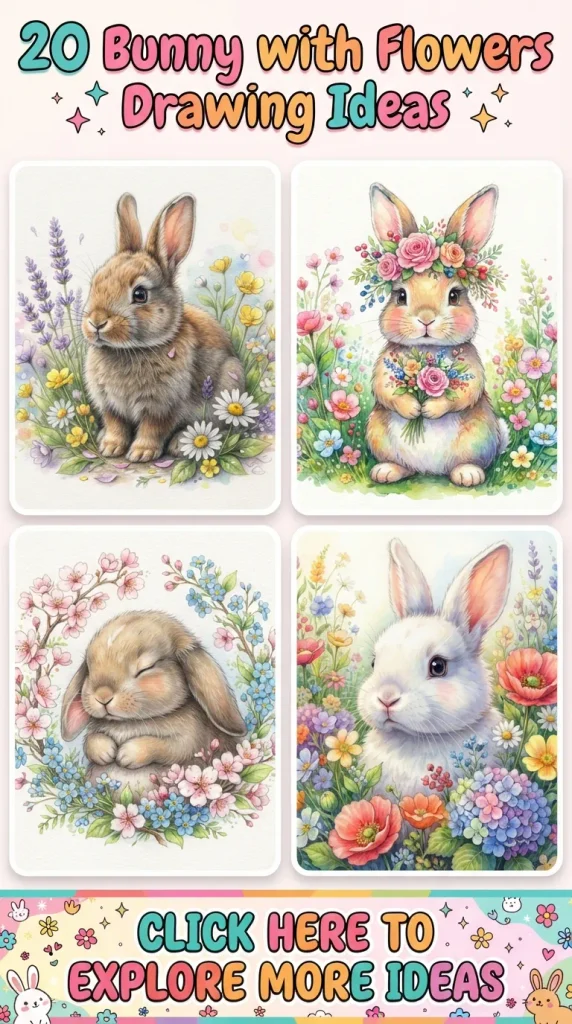
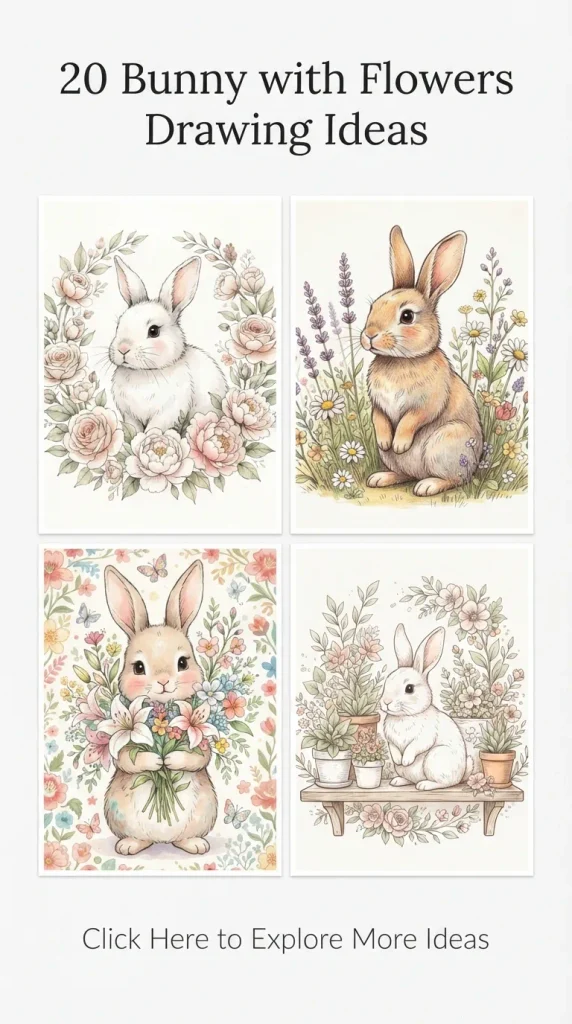
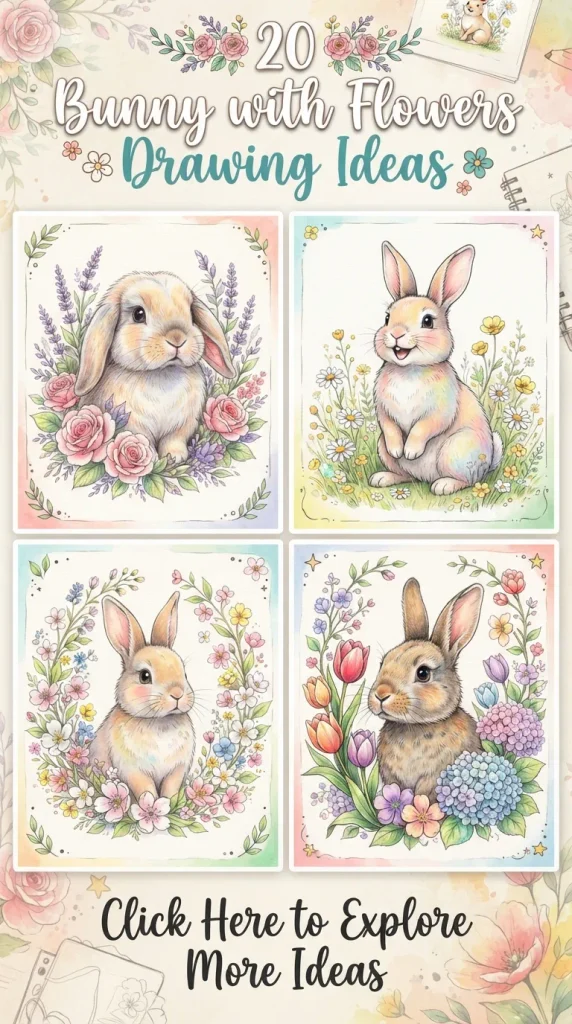
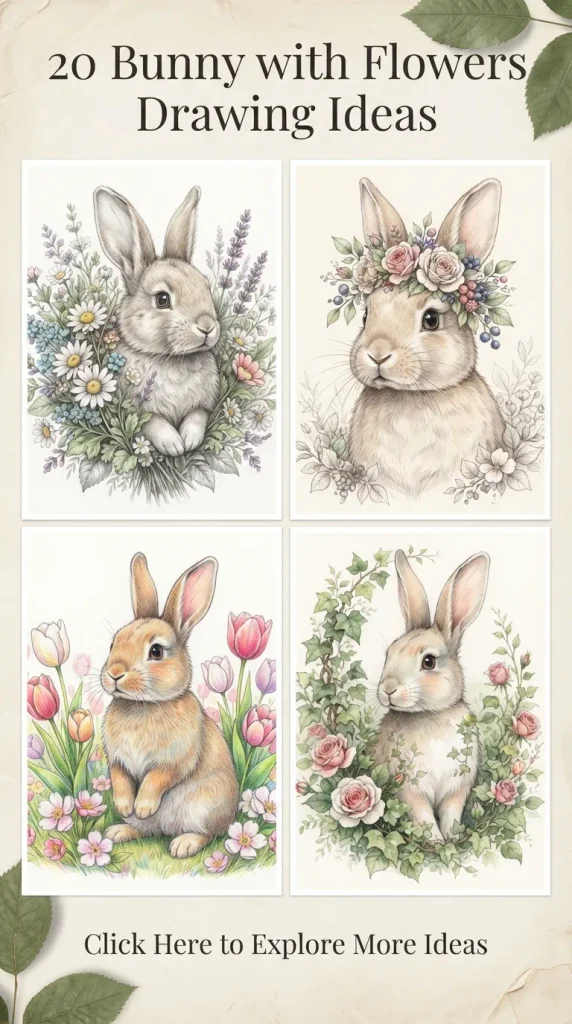
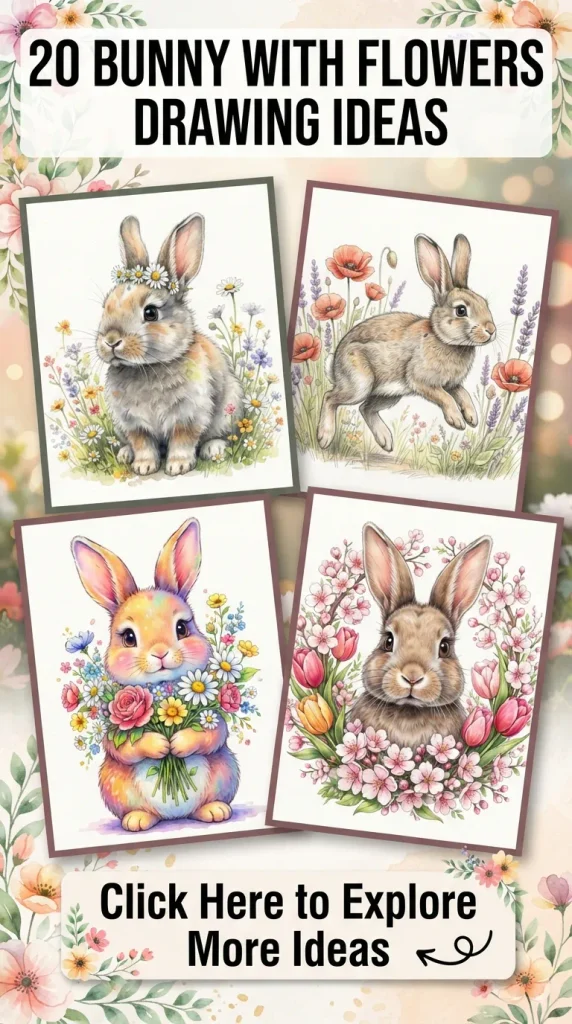
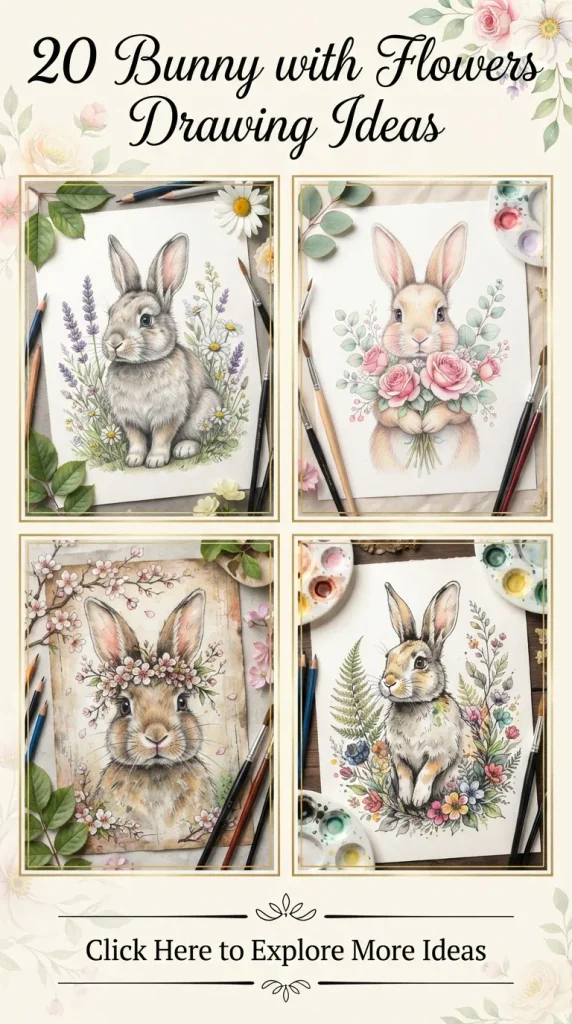
Capturing the gentle grace of a rabbit nestled among delicate botanicals offers a timeless aesthetic for illustrators, bullet journal enthusiasts, and Pinterest creators alike. The soft textures of bunny fur paired with the structural elegance of petals, leaves, and stems create a balanced harmony of wildlife and organic botanical art.
Essential Supplies and Techniques for Aesthetic Bunny Drawings
Before diving into specific scene concepts, having the right medium strategy helps bring these aesthetic drawings to life:
- Pencil Sketching & Linework: Use hard lead pencils (2H to HB) for drafting basic organic forms without denting the paper. For clean, aesthetic line art, archival pigment liners (0.05 mm to 0.3 mm) offer crisp definition for tiny whiskers and flower stamens.
- Watercolor & Wet Media: Soft pastel palettes—such as blush pink, sage green, dusty lavender, ochre, and warm cream—work best on 300 GSM cold-press watercolor paper. Wet-on-wet techniques yield realistic fur fluffs and atmospheric botanical blooms.
- Colored Pencils & Gouache: For layering rich textures, wax-based colored pencils combined with opaque gouache highlights allow you to paint individual bright whiskers over dark floral backgrounds.
1. The Classic Wildflower Floral Crown Lop
Introduction
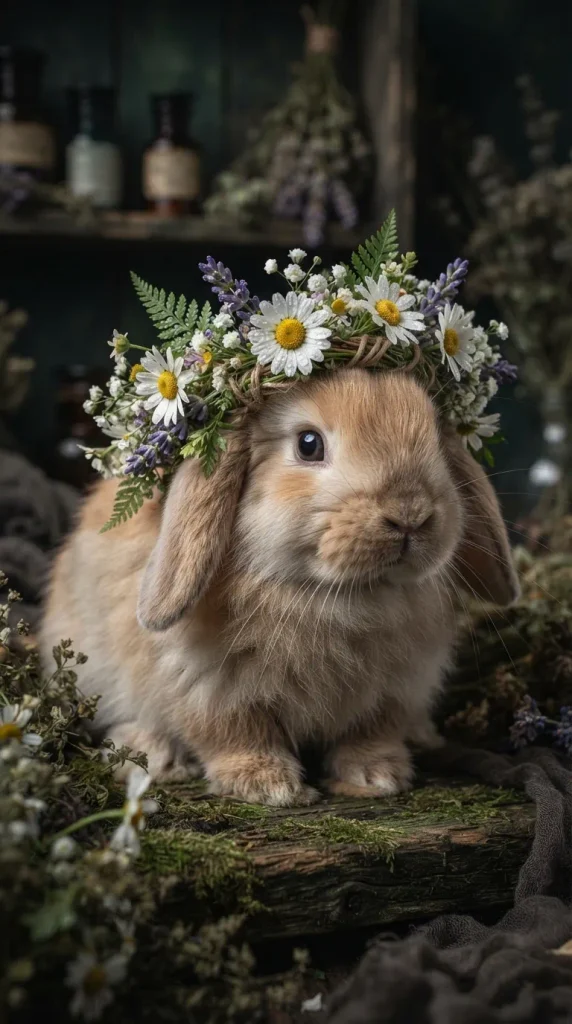
A tender Holland Lop rabbit wearing a hand-woven crown of countryside wildflowers represents the quintessence of cottagecore illustration. This design emphasizes sweet, drooping ears interwoven with organic, untamed blooms.
What This Idea Means
This concept symbolizes quiet innocence and woodland royalty. It merges animal portraiture with traditional botanical wreath styling, focusing on balance, soft weight, and natural asymmetry.
How to Make It
- Sketch an oval for the head, tilting it slightly to one side to give a curious posture.
- Add broad, drooping lop ears falling along the side of the cheeks.
- Draw an arched headband guideline resting just in front of the ears across the crown of the head.
- Map out focal flowers (such as mini daisies and buttercups) along the band, letting smaller baby’s breath and sprigs of lavender drape naturally over the fur.
- Ink with fine lines, using short, rhythmic strokes around the cheek edges to mimic soft fur texture.
Tips and Variations
- Beginner Tip: Keep the base of the crown hidden beneath small overlapping leaves so you don’t have to draw a visible wire or twine band.
- Variation: Replace field daisies with miniature garden roses for a vintage, romantic aesthetic.
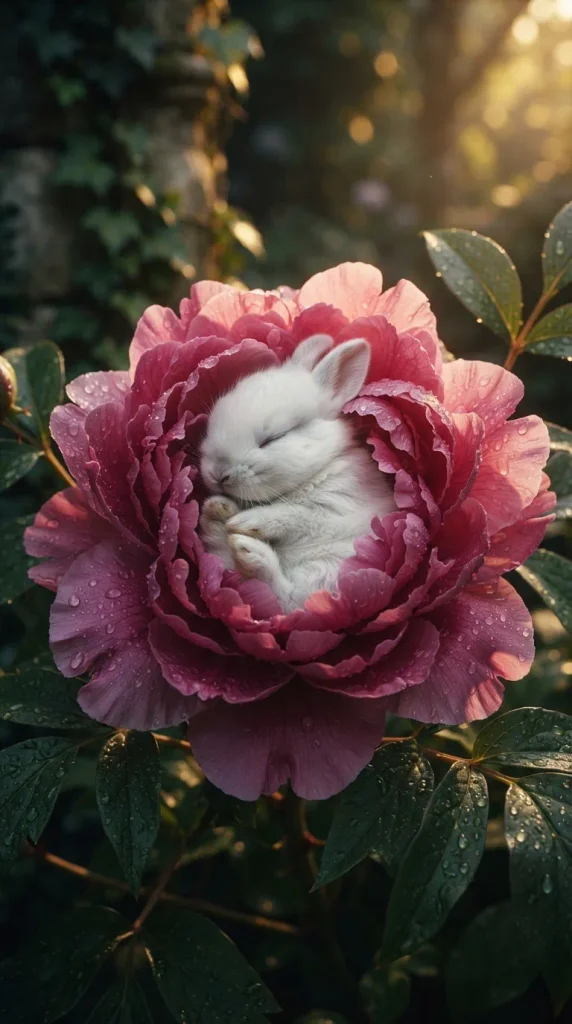
2. Sleeping Bunny Tucked in a Peony Meadow
Introduction
A peaceful, curled-up rabbit resting inside the blooming petals of an oversized peony bloom captures absolute comfort and stillness.
What This Idea Means
This composition explores safe harbors and natural nests. It uses curved lines and soft folds to evoke warmth, rest, and natural sanctuary.
How to Make It
- Draw a curled, bean-like shape representing the sleeping bunny with its paws tucked tight against its chest and ears lying flat against the back.
- Wrap large, ruffled peony petals around the base and sides of the bunny’s body, making the rabbit appear nested inside the flower core.
- Use soft, curved hatching or gentle watercolor washes along petal ridges to show depth and layers.
Tips and Variations
- Beginner Tip: Shade the inner depths between overlapping petals darker to make the light-furred bunny stand out effortlessly.
- Variation: Draw the rabbit sleeping inside a giant open tulip or nestled inside a hollowed sunflower center.
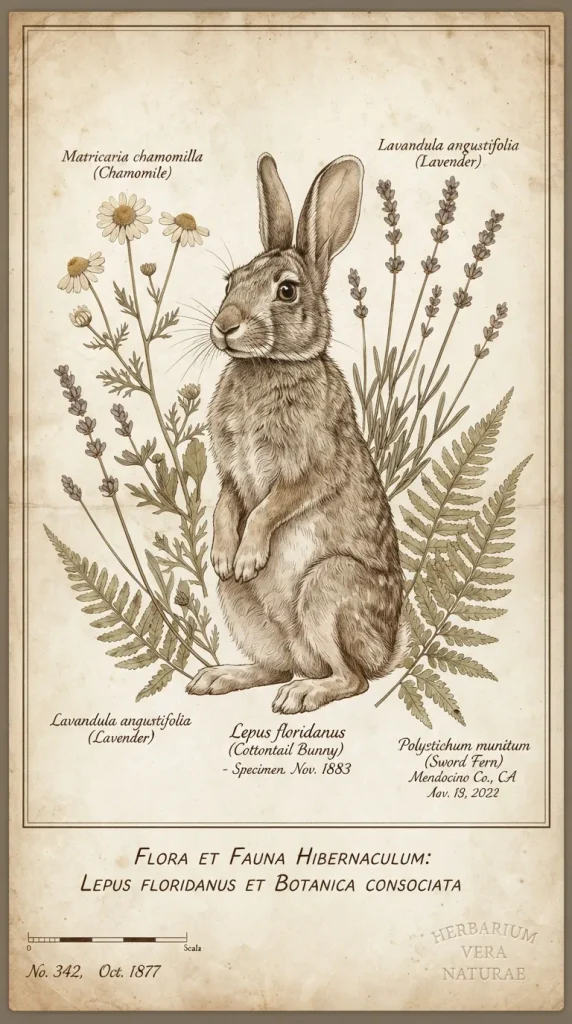
3. The Botanical Herbarium Pocket Bunny
Introduction
An aesthetic vintage naturalist concept featuring a dainty rabbit profile surrounded by labeled stems of lavender, chamomile, and pressed fern leaves.
What This Idea Means
Inspired by 19th-century scientific botanical journals, this drawing blends vintage educational art with gentle, minimalist animal sketches.
How to Make It
- Frame your page with a light rectangular pencil border.
- Place a clean, minimalist silhouette of a rabbit sitting upright in the center or lower-third corner.
- Sketch tall, slender stems of dried chamomile, thyme, and pressed eucalyptus rising behind and around the bunny.
- Add faux scientific calligraphy or handwritten labels naming the plants at the bottom.
Tips and Variations
- Beginner Tip: Use tea-stained paper or a diluted sepia ink wash for an authentic aged parchment look.
- Variation: Incorporate delicate postage stamp outlines and faux botanical wax seal illustrations.
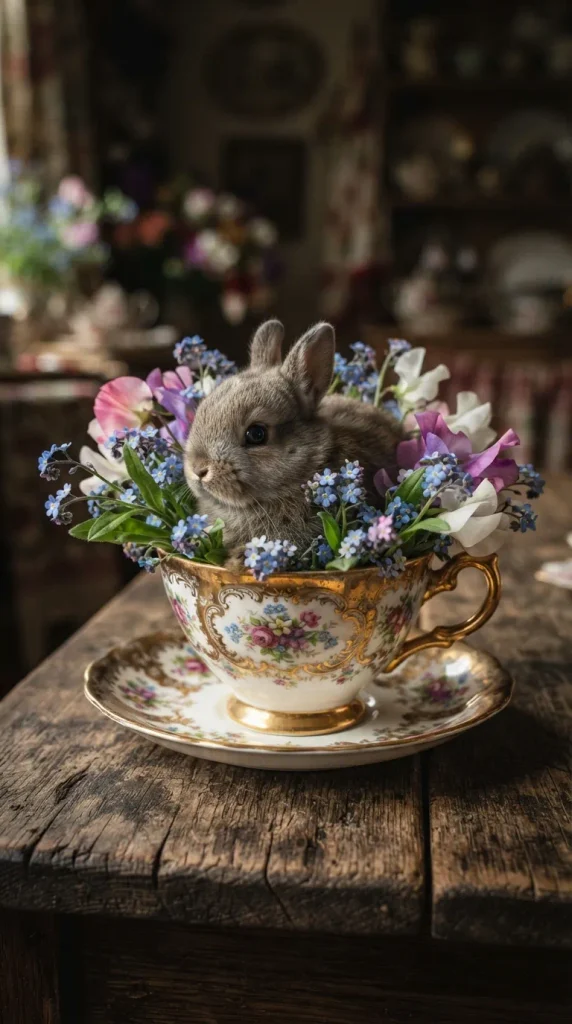
4. Vintage Teacup Garden Bunny
Introduction
A tiny dwarf bunny peering over the rim of an antique porcelain teacup overflowing with blooming forget-me-nots and sweet peas.
What This Idea Means
This whimsical still-life illustrates playful miniature scales, domestic comfort, and refined storybook nostalgia.
How to Make It
- Draw a classic teacup with an ornate curved handle and a matching saucer below.
- Sketch two tiny rabbit paws gripping the edge of the teacup rim, with large round eyes and perked dwarf ears showing above.
- Fill the remaining opening of the teacup with cascading stems of sweet peas, forget-me-nots, and trailing ivy spilling down the sides.
Tips and Variations
- Beginner Tip: Use a geometric grid or circle guides to ensure the teacup rim and saucer maintain proper elliptical perspective.
- Variation: Decorate the porcelain cup with a delicate chinoiserie pattern or gold-leaf gilding on the handle.
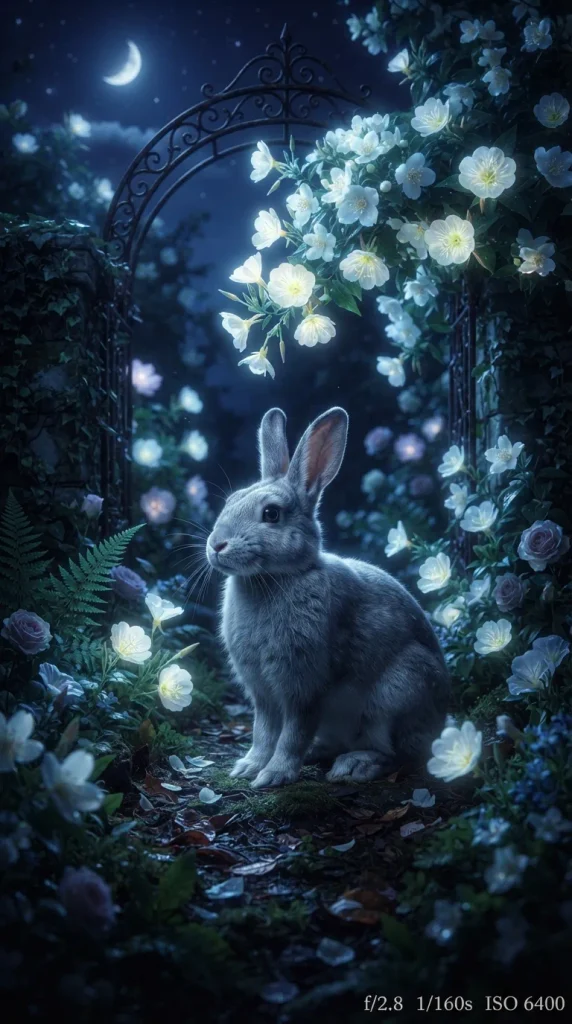
5. Moonlit Bunny with Glowing Night-Blooming Jasmine
Introduction
A mystical, dark-aesthetic illustration showing a dark or silver rabbit sitting beneath moonlit branches of night-blooming cereus and fragrant white jasmine.
What This Idea Means
Moving away from sunny pastels, this idea captures celestial energy, nocturnal serenity, and the quiet magic of nighttime gardens.
How to Make It
- Tone the background with a deep indigo, charcoal, or midnight-blue watercolor wash.
- Leave the rabbit’s silhouette white or light gray, using negative space painting techniques.
- Sketch star-shaped jasmine blossoms and white moonflowers framing the top and corners, using opaque white gouache or gel pens for glowing stamens.
- Add subtle circular moon halo effects around the rabbit’s head.
Tips and Variations
- Beginner Tip: Use masking fluid over the flowers and bunny silhouette before applying dark background washes to keep edges clean.
- Variation: Add tiny constellations or metallic gold stippling to the background sky.
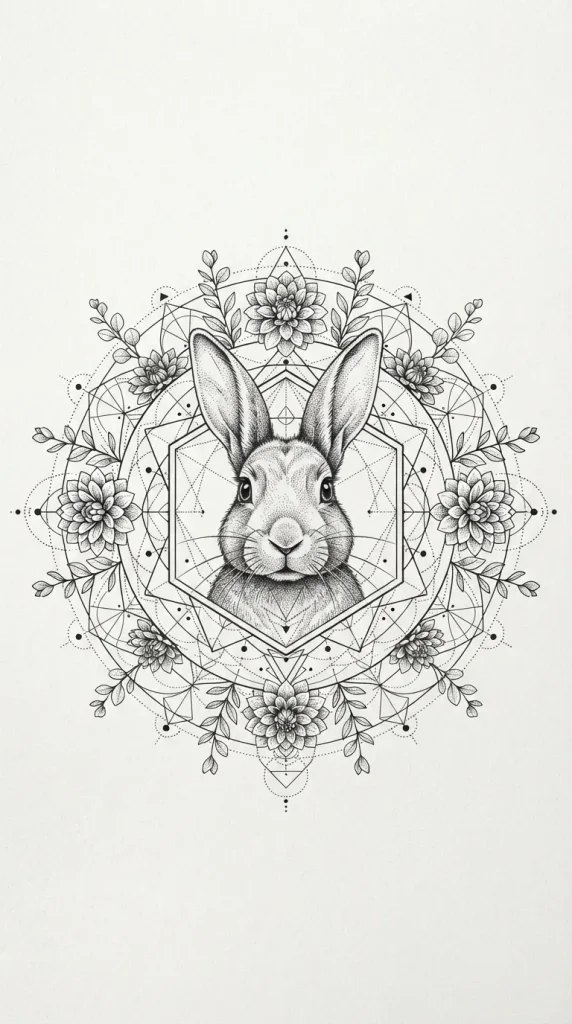
6. Geometric Stippled Bunny and Floral Mandala
Introduction
A contemporary fusion of clean geometric line work, precise stippling (dot-work), and flowing organic florals framing a central rabbit portrait.
What This Idea Means
This style brings modern graphic design into nature illustration, balancing strict sacred geometry with the chaotic beauty of blooming flora.
How to Make It
- Draw concentric compass circles and fine-line polygons (triangles or hexagons) in the center of the sheet.
- Place a detailed, high-contrast black-ink rabbit bust inside the geometric framework.
- Let hand-drawn botanical elements—like symmetrical dahlias, wild vines, and eucalyptus leaves—break through and weave over the rigid geometric boundaries.
- Use a 0.1 mm fineliner to stipple the shadows on the rabbit’s face and petals.
Tips and Variations
- Beginner Tip: Vary the density of dots (closer together for deep shadows, spread apart for highlights) rather than pressing harder with your pen.
- Variation: Keep the rabbit strictly black-and-white stippled while painting the floral mandala in rich metallic watercolors.
7. The Dandelion Flight Bunny
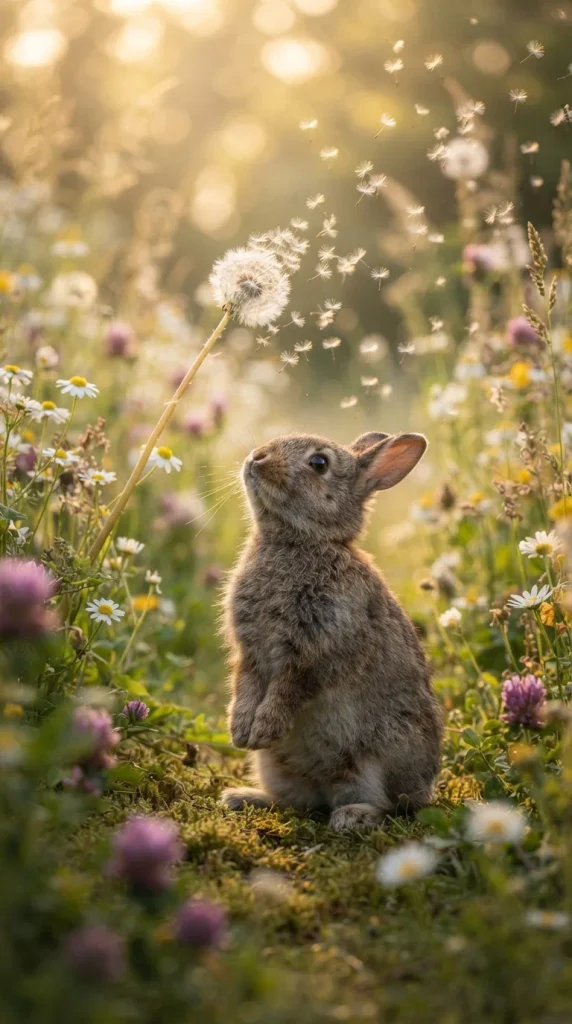
Introduction
A dynamic, airy sketch of a playful bunny looking upward as a fluffy dandelion clock disperses its seeds and mini blooms into the breeze.
What This Idea Means
This concept celebrates movement, wishes, and the fleeting transitions of spring into summer.
How to Make It
- Position the bunny in a dynamic three-quarter view, head tilted upward with perked ears and an inquisitive expression.
- Draw a tall dandelion stem to one side with half of its spherical seed head intact.
- Illustrate individual dandelion parachutes drifting across the composition, carrying tiny botanical petals in the wind current.
Tips and Variations
- Beginner Tip: Draw curved directional flow lines first to guide the natural drift path of the floating seeds.
- Variation: Include small honeybees or ladybugs flying alongside the drifting dandelion seeds.
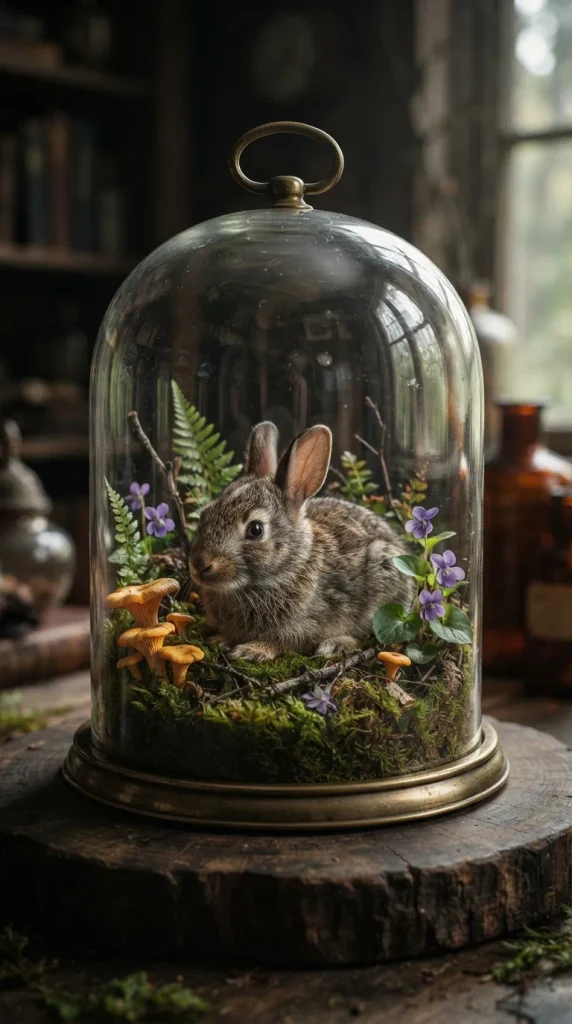
8. Woodland Bunny with Mushroom and Wild Flora Cloche
Introduction
A storybook terrarium concept featuring a wild cottontail sitting beneath an ornate glass cloche bell jar surrounded by chanterelles, moss, and woodland violets.
What This Idea Means
It conveys preservation, micro-worlds, and fairytale curiosities, bringing forest floor treasures into an elegant display.
How to Make It
- Sketch an elongated glass dome cloche with an ornate glass handle on a wooden base.
- Inside the glass outline, draw a wild cottontail sitting calmly among tufts of soft moss, small forest mushrooms, and creeping wood sorrel.
- Add light white curved streaks down the side of the glass contour to represent light reflections and transparency.
Tips and Variations
- Beginner Tip: Keep the elements inside the glass slightly softer in line weight than the glass base and rim to emphasize the barrier of the jar.
- Variation: Have the bunny sitting just outside an overturned cloche with vines bursting out.
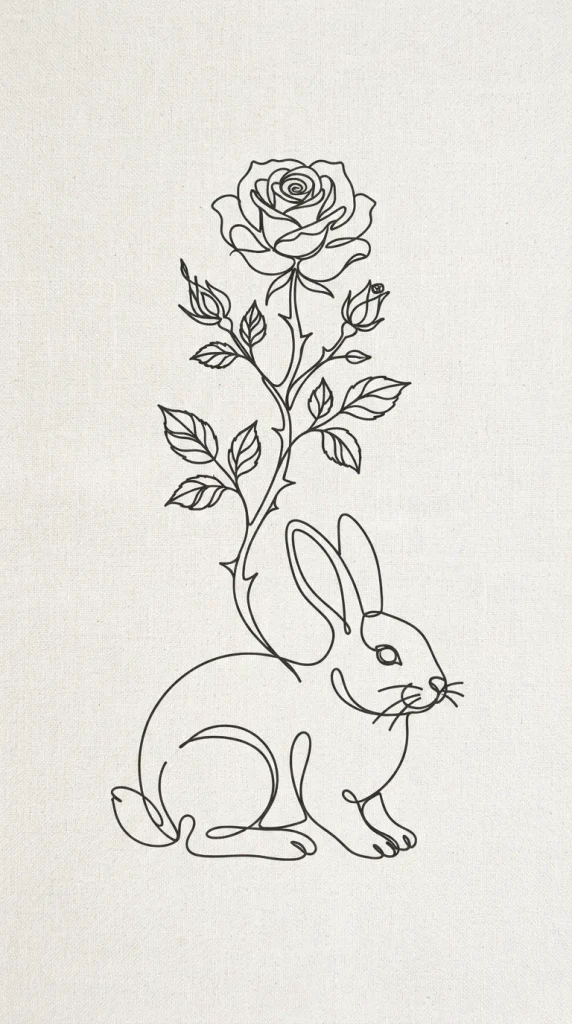
9. Minimalist Continuous Line Bunny with Monoline Florals
Introduction
A modern, minimalist single-line drawing that outlines a seated rabbit smoothly transitioning into a single stem of a blooming rose or tulip.
What This Idea Means
This style showcases artistic restraint and fluid elegance, focusing on pure form and unbroken rhythm.
How to Make It
- Practice drawing the contour of a rabbit without lifting your pen from the paper.
- As the line finishes the curve of the rabbit’s back or hind leg, sweep the pen upward into the stem, leaves, and spiraling petals of a flower.
- Maintain consistent line thickness using a monoline marker or fine fountain pen.
Tips and Variations
- Beginner Tip: Lightly map out the rabbit and flower with a 4H pencil first, then trace over it in one continuous, confident ink stroke.
- Variation: Add subtle abstract pastel watercolor splashes behind the finished line art.
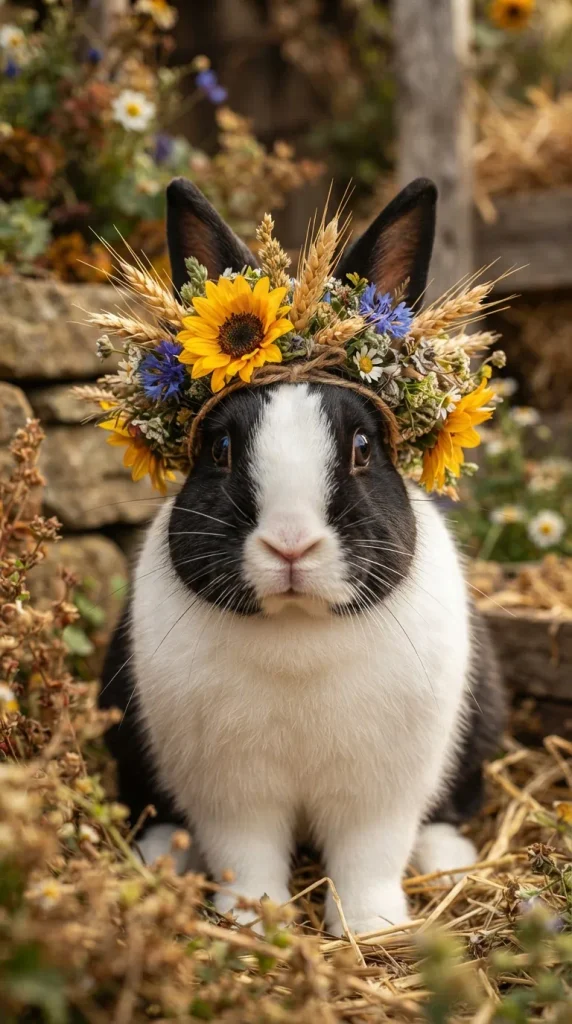
10. The Sunflower Crown Dutch Bunny
Introduction
A bold, vibrant portrait featuring a characteristic two-toned Dutch rabbit adorned with radiant, golden sunflowers and rustic wheat stalks.
What This Idea Means
Embodying late summer warmth, abundance, and cheerful rustic energy, this piece contrasts bold markings with vibrant golden hues.
How to Make It
- Sketch the distinct markings of a Dutch rabbit: white blaze up the nose, white front legs and collar, and colored patches over the ears, eyes, and rear.
- Crown the bunny’s head with a bold, open sunflower offset to one ear, accented with tiny stalks of golden wheat and dark green foliage.
- Use rich ochre, deep amber, and chocolate brown tones for the floral centers and fur contrasts.
Tips and Variations
- Beginner Tip: Use the dark patches around the Dutch rabbit’s eyes to naturally make the eyes pop without needing heavy black outlines.
- Variation: Place the bunny sitting directly inside a basket of giant sunflowers.
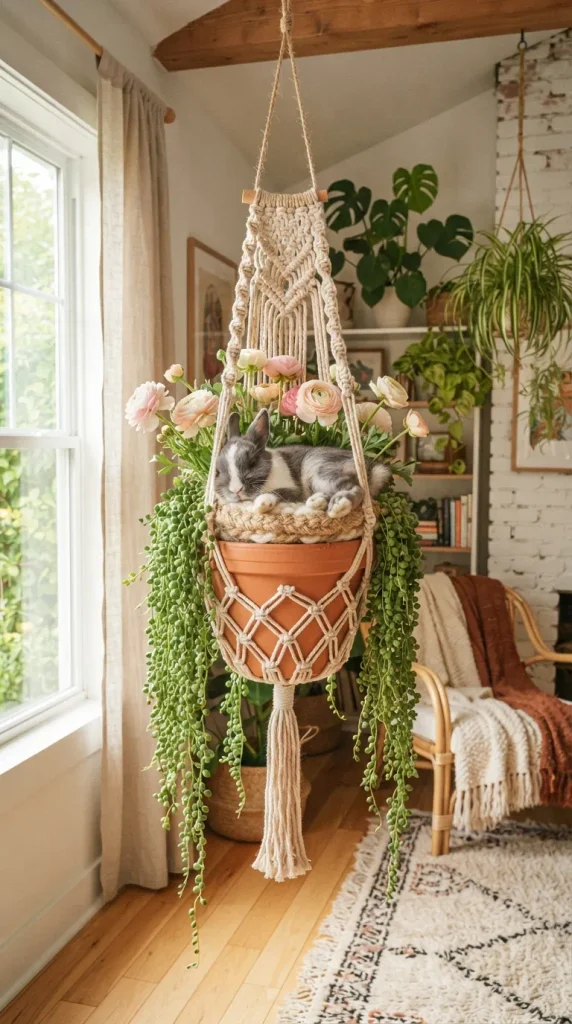
11. Bunny in a Suspended Macramé Floral Hammock
Introduction
A trendy bohemian sketch showing a small bunny lounging casually inside a woven macramé hanging planter filled with trailing string of pearls, eucalyptus, and ranunculus.
What This Idea Means
A modern boho-chic concept celebrating relaxed living, indoor plant parenting, and crafted textile aesthetics.
How to Make It
- Draw suspended macramé cords with decorative knots hanging from the top of the frame down to a woven circular base.
- Sketch a relaxed bunny resting its chin lazily over the basket edge.
- Cascade string-of-pearls succulents, ranunculus blooms, and silver dollar eucalyptus leaves spilling out between the rope knots.
Tips and Variations
- Beginner Tip: Use a ruler to get the main hanging cords evenly spaced before sketching the freehand fiber knots and leaves.
- Variation: Add fringed macramé tassels hanging from the bottom of the planter.
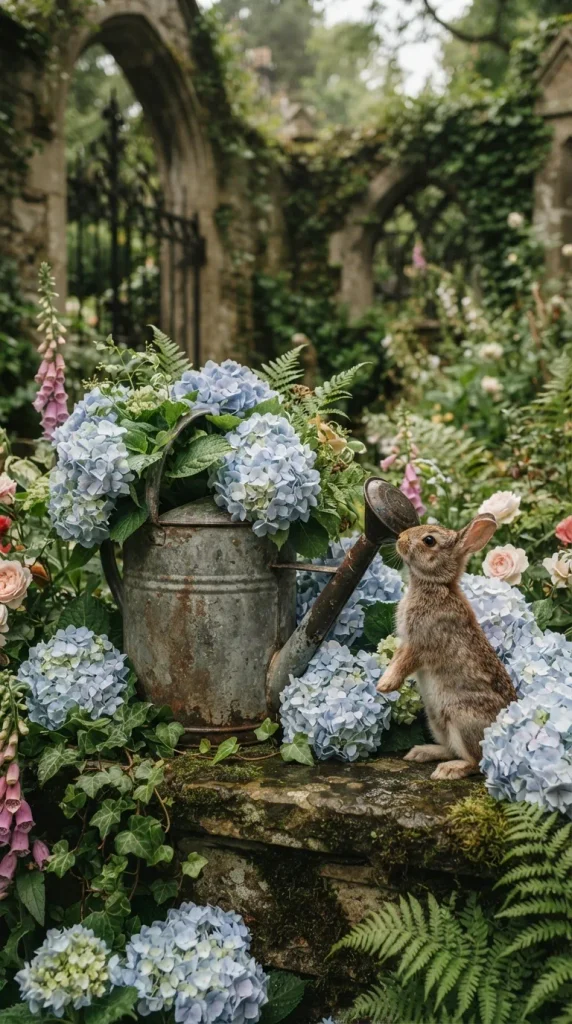
12. Vintage Cottage Watering Can Garden Bunny
Introduction
A rustic gardening scene showing an antique zinc or copper watering can bursting with blooming hydrangeas and a curious rabbit sniffing the spout.
What This Idea Means
This piece highlights garden serenity, vintage farm tools, and gentle interactions between wildlife and cottage gardens.
How to Make It
- Sketch a wide-bodied, classic garden watering can angled diagonally across the paper.
- Fill the top opening with a lush, clustered dome of hydrangea blossoms and lush green foliage.
- Place an upright cottontail bunny beside the can, stretching its neck with its nose gently touching the watering can spout.
Tips and Variations
- Beginner Tip: Break hydrangeas into small four-petal clusters grouped together into spherical silhouettes rather than drawing every single petal.
- Variation: Paint the watering can with aged, peeling enamel and chipped floral motifs.
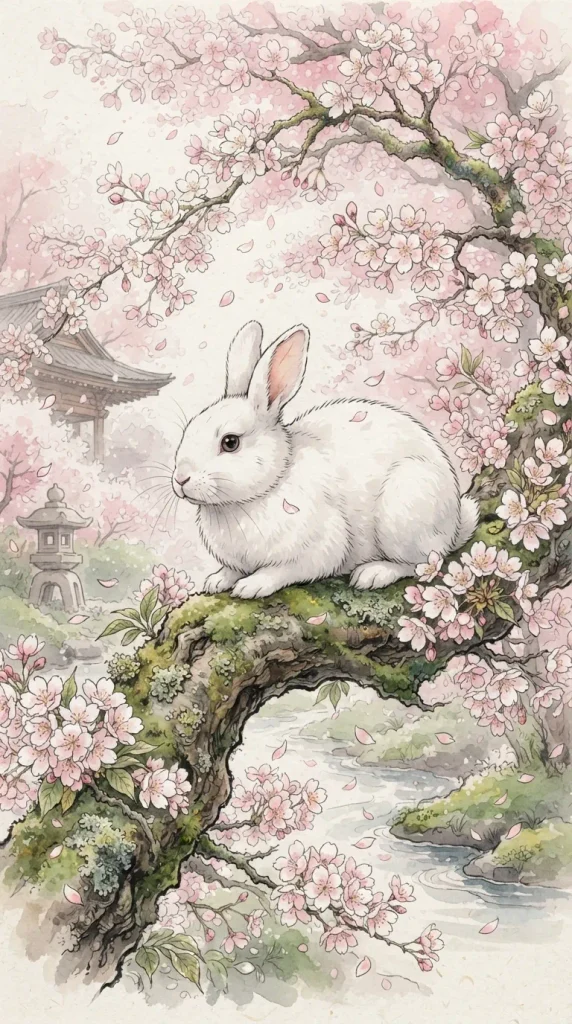
13. The Cherry Blossom (Sakura) Drift Bunny
Introduction
An East-Asian inspired aesthetic featuring a pure white bunny sitting gracefully on a mossy branch under a shower of delicate pink cherry blossoms.
What This Idea Means
Symbolizing spring renewal, mindfulness, and the beauty of nature’s ephemeral moments, this design uses soft pinks and flowing atmospheric movement.
How to Make It
- Draw an aged, textured tree branch sweeping across the lower half of the page.
- Seat a fluffy white bunny on the branch, looking back over its shoulder.
- Frame the upper corners with soft clusters of five-petaled sakura blooms.
- Sketch individual loose petals fluttering down in a gentle spiral around the rabbit.
Tips and Variations
- Beginner Tip: Keep the sakura petals very light pink with deeper crimson specks right at the flower centers for immediate realism.
- Variation: Style the artwork using traditional Japanese sumi-e ink brush techniques.
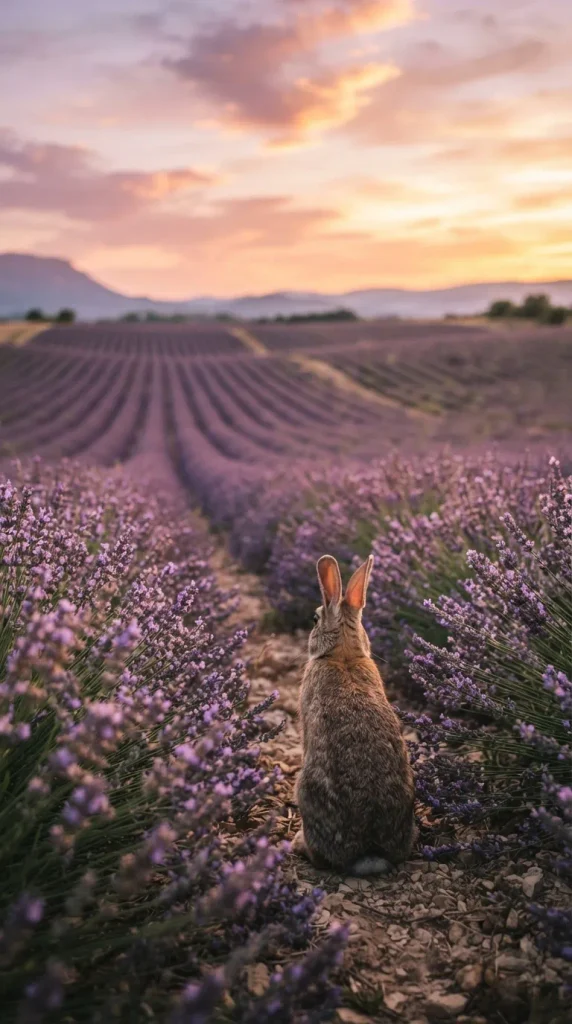
14. Bunny in a Field of Lavender Sunset
Introduction
A scenic landscape sketch featuring a rabbit silhouette seen from behind, looking out over rolling rows of fragrant purple lavender fields under an aesthetic pastel sunset.
What This Idea Means
Evokes deep tranquility, peaceful contemplation, and the soothing visual rhythm of French provincial landscapes.
How to Make It
- Establish a low horizon line and sketch converging perspective lines for the rows of lavender bushes.
- Draw the back view of a seated rabbit in the foreground with its distinct upright ears turned slightly to catch ambient sound.
- Fill the midground rows with repetitive, upright stalks of lavender in shades of lilac, violet, and deep plum.
- Blend a warm gradient sky from soft peach to dusky lilac behind the landscape.
Tips and Variations
- Beginner Tip: Make the lavender stems in the foreground larger and more distinct, turning into soft textured blurs as they approach the horizon.
- Variation: Add a soft glowing setting sun directly between the bunny’s ears along the horizon.
15. The Floral Garland Bunny Silhouette
Introduction
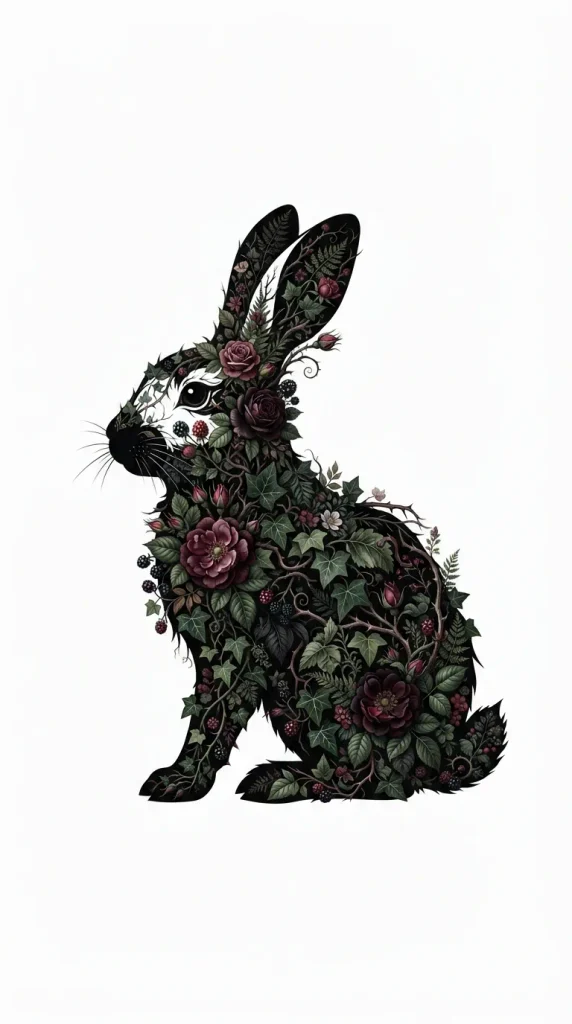
A clever graphic illustration where the body of a rabbit is rendered as a clean silhouette composed entirely of densely packed, intricate flowers and leaves.
What This Idea Means
A celebration of negative space and botanical illustration where the boundaries of the animal are defined purely by nature itself.
How to Make It
- Lightly outline the full profile silhouette of a sitting rabbit with a very faint pencil line.
- Fill the inside of the silhouette with interlocking botanical elements: rosebuds, buttercups, fern fronds, berries, and ivy leaves.
- Ensure flowers and leaves press flush against the inner pencil contour to clearly define the rabbit shape.
- Erase the underlying pencil border, leaving only the botanical arrangement to form the rabbit figure.
Tips and Variations
- Beginner Tip: Place larger focal flowers inside the broad areas (body and hips) and reserve tiny berries and leaf tips for the ears, nose, and paws.
- Variation: Invert the idea by making the rabbit clean white while filling the entire background space outside the silhouette with dense florals.
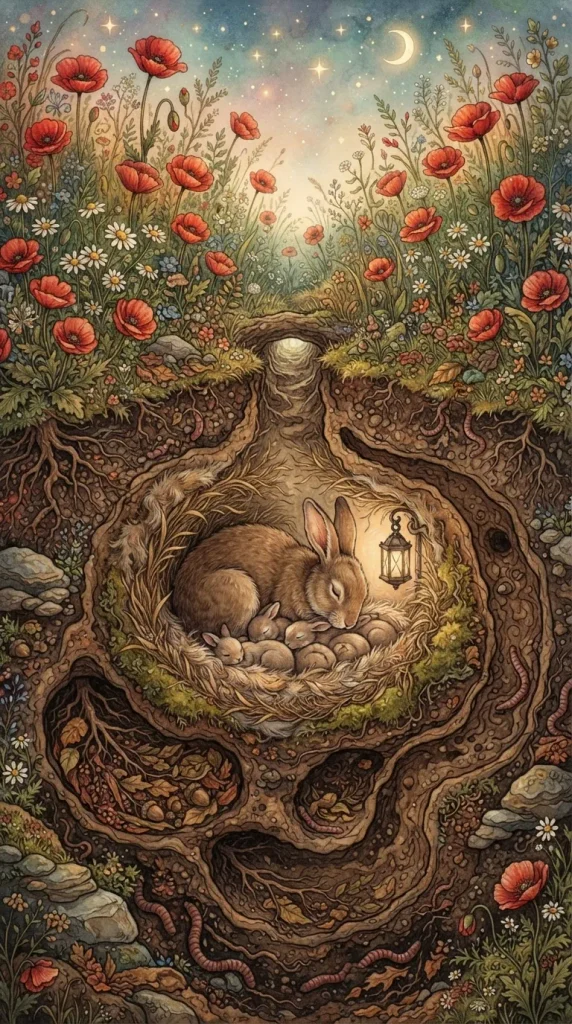
16. Bunny Burrow with Under-and-Over Ground Florals
Introduction
A cross-section illustration showing a cozy underground rabbit burrow nestled beneath a rich surface garden of poppies, chamomile, and tall grass.
What This Idea Means
This storybook concept explores hidden worlds, coziness, and the connection between underground life and above-ground botanical beauty.
How to Make It
- Divide the page horizontally near the upper third with an uneven ground line.
- Above ground, sketch tall, bright red poppies, Queen Anne’s lace, and lush green blades of grass reaching toward the sky.
- Below ground, draw the cross-section of a cozy burrow chamber lined with dried twigs and roots, featuring a mother bunny and sleeping kits.
- Draw organic plant roots hanging through the ceiling of the burrow.
Tips and Variations
- Beginner Tip: Use warm, earthy brown gouache or ink washes for the underground soil layers to create a snug, cave-like contrast.
- Variation: Add small underground details like buried stones, sleeping earthworms, or little storybook furniture.
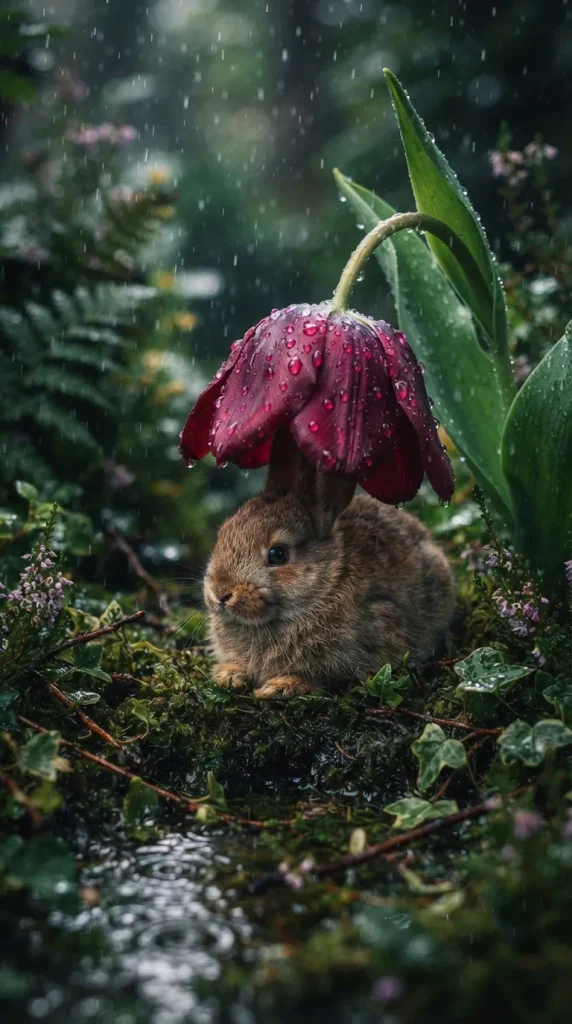
17. The Floral Umbrella Spring Shower Bunny
Introduction
A playful, sweet sketch of a small bunny taking shelter beneath an overturned giant blossom—such as an upside-down tulip or daffodil—during a gentle spring rain.
What This Idea Means
An homage to childhood storybooks that evokes themes of protection, shelter, and nature providing for its smallest creatures.
How to Make It
- Draw an arching flower stem with a broad, bell-shaped flower (like a tulip, bluebell, or foxglove) acting as an overhead canopy.
- Place a tiny rabbit sitting comfortably underneath the flower bell, dry and safe.
- Draw delicate, diagonal dashed pencil lines or white ink streaks to represent a soft spring rain in the background.
- Add tiny water droplets resting on the outer petals and dripping from the tips.
Tips and Variations
- Beginner Tip: Tilt the flower bell slightly to match the angle of the falling rain for natural dynamic realism.
- Variation: Draw tiny puddles around the flower base with miniature ripples.
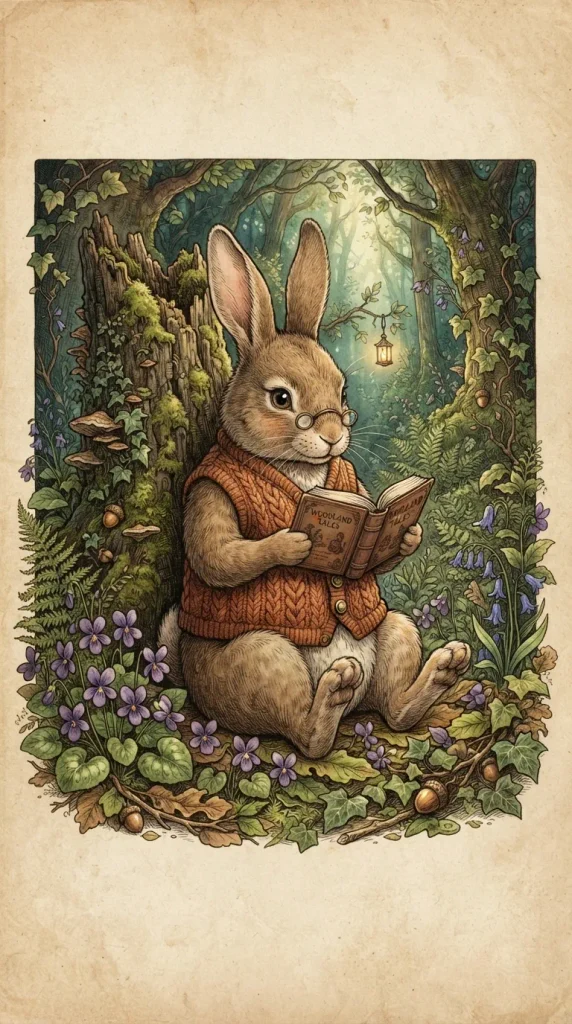
18. Bunny Reading a Book on a Bed of Moss and Violets
Introduction
A classic anthropomorphic aesthetic featuring a well-dressed woodland rabbit sitting against a mossy log, reading an open botanical book amidst wild purple violets.
What This Idea Means
Ideal for dark academia and classic cottagecore fans, this idea blends scholarly leisure with fairytale naturalism.
How to Make It
- Draw a seated bunny wearing a simple vintage waistcoat or cozy knitted scarf.
- Place an open, miniature storybook in its front paws.
- Position the rabbit leaning against a fallen tree stump covered in soft patches of green moss, shelf mushrooms, and sweet wild violets.
- Use cross-hatching to shade the pages and clothing for an antique etching look.
Tips and Variations
- Beginner Tip: Keep the clothing simple so it doesn’t distract from the natural anatomy and fur textures of the rabbit’s head and paws.
- Variation: Add small vintage round reading spectacles resting on the bunny’s snout.
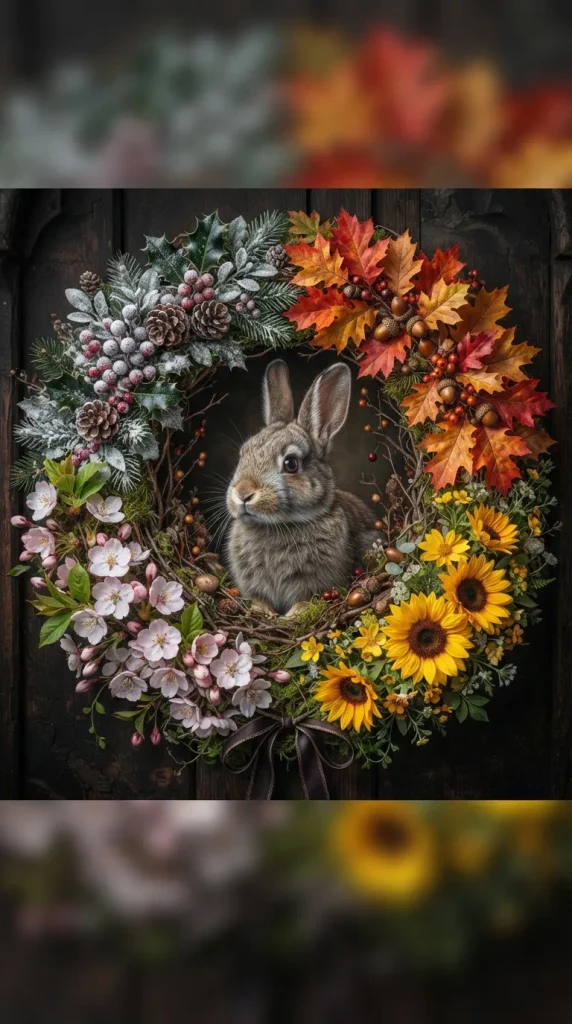
19. The Wreath of Seasons Bunny
Introduction
A circular wreath composition framing a central bunny portrait, with the circular floral garland transitioning through all four seasons: cherry blossoms, sunflowers, autumn leaves, and winter berries.
What This Idea Means
A cyclical piece representing time, renewal, and the constant companionship of nature throughout the year.
How to Make It
- Lightly trace a large perfect circle in the center of your page using a compass or plate.
- Place a front-facing rabbit head and shoulders in the center of the ring.
- Divide the circular wreath into four quarters:
- Spring: sakura and daffodils
- Summer: sunflowers and daisies
- Autumn: maple leaves, acorns, and marigolds
- Winter: holly leaves, pinecones, and frosted winterberries
- Seamlessly blend the stems and foliage where each quadrant meets.
Tips and Variations
- Beginner Tip: Color code each quadrant clearly so the transition between seasons reads immediately at first glance.
- Variation: Draw the central bunny with a split fur coat representing seasonal changes (from summer brown to winter white).
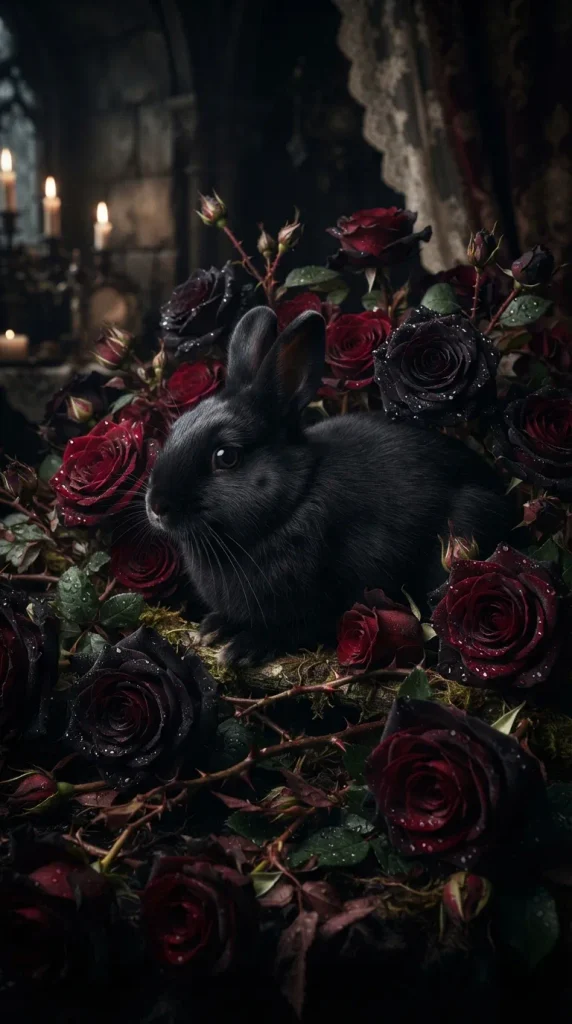
20. Gothic Dark Romance Bunny with Black Baccara Roses
Introduction
A moody, dramatic aesthetic featuring an elegant black or sable rabbit surrounded by deep velvety burgundy roses, thorny stems, and antique silver filigree.
What This Idea Means
A departure from pastel cottagecore, this concept explores dark elegance, gothic romance, and rich textural depth.
How to Make It
- Sketch a sleek, dark rabbit with smooth fur highlights along the ears and cheekbones.
- Frame the rabbit with large, velvety roses with layered petals, sharp thorns, and deep foliage.
- Use a color palette of deep oxblood, charcoal, deep emerald green, and cool silver accents.
- Use a white gel pen to add sharp, gleaming specular highlights in the bunny’s dark eye and along petal dew drops.
Tips and Variations
- Beginner Tip: When drawing dark fur, focus on sketching the highlights rather than the shadows; let the dark tone fill the rest.
- Variation: Add antique silver keys or dripping vintage wax taper candles tangled within the rose thorns.
Pro Tips for Perfecting Floral Bunny Art
To make your drawings stand out on Pinterest and social feeds, consider these finishing steps:
- Emphasize the Eyes: Rabbits have large, expressive eyes placed on the sides of their heads. Always leave a crisp, untouched white specular highlight to instantly give your drawing life.
- Vary Line Weights: Use thicker line weights for the outer silhouettes of the bunny and main floral headers, and switch to hair-thin lines for interior petal veins, whiskers, and inner ear fuzz.
- Curate Your Color Palette: Limit your palette to 3–5 cohesive colors per drawing to maintain an intentional aesthetic.